
March 13, 2020— A day that changed the world and everyone in it forever. We faced, and ultimately overcame, a global pandemic… together. And for a brief, remarkable moment, educators around the world were held in the same regard as doctors, nurses, and first responders. We may not have been saving lives in the literal sense, but we worked tirelessly to preserve something just as fragile—our students’ sense of normalcy—even if it had to happen through the lens of a Zoom screen.
During that time, we were seen as something close to superheroes—something many of us always knew we were in quiet ways, even if our capes stayed out of sight. In an astonishingly short period, we reimagined education. We found ways to teach, nurture, support, and connect with students whose lives had been upended overnight. The caring, the stability, the human connection—every bit of it mattered, even when it lived on a 12-by‑17‑inch laptop screen. And it mattered not just to students, but to administrators, teachers, and parents who needed that connection just as badly.
For the first time in decades—since before A Nation at Risk was first published in 1983—our profession finally stood in a positive spotlight. Politicians, parents, and businesses voiced appreciation and respect for the work we as educators had always done. The crisis made our contributions undeniable. For a moment, society stood united behind the importance of children’s education.
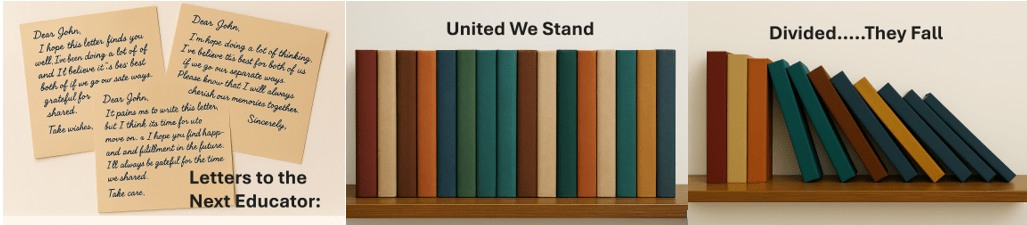
However, as the saying goes, “All good things must come to an end”—and this end arrived swiftly. Fast‑forward to 2026, and the state of education is spiraling downward, swallowed by uncertainty. Its purpose feels misplaced, buried under careless decisions, shortsighted policies, and political agendas from all sides. In many ways, this has become our own epidemic.
Much like the game of Jenga, strategy, patience, and precision matter. Each block must be removed thoughtfully and placed intentionally, allowing the structure to grow. But pull one block too quickly—or place it carelessly—and the entire tower becomes unstable. Eventually, it collapses. As the old adage reminds us: haste makes waste.
Today, our educational structure is wobbling. Programs are defunded, contracts dissolved, and long-term initiatives dismantled without fully understanding their purpose or the ripple effects that follow. Pulling apart systems that took years to build does more than disrupt—it harms educators, destabilizes support systems, and ultimately impacts the students who depend on them most.
In every part of life—at work, at home, in government—there must be checks, balances, and thoughtful planning. Without them, conflict grows, stability falters, and the people most vulnerable to the fallout—our children—are left without protection.
The challenges we face today are not the result of one issue, but of many layered crises: school shootings, teacher and bus driver shortages, declining parental engagement, inadequate teacher preparation, student disengagement, banned books, harmful social‑media trends, rising mental‑health needs, restricted courses of study, gender and equity conflicts, and even the looming threat of dismantling the Department of Education. And this is only the beginning of the list.
Problems continue to be dismissed rather than addressed. In doing so, we create a distorted image of what a true democracy looks like. Our mission—our calling—has always been the well‑being of children. That must never change.
There was a time when educators were valued, when the education system had a respected voice, when we each had a seat at the table. Now, the locks have been changed, and we find ourselves on the outside looking in.
This must change—and it must change now—before it is too late.
 Becoming The Change
Leave a comment