
“You cannot be anything you want to be—but you can be a whole lot more of who you already are.”
— Tom Rath
Each of us brings a unique set of strengths that shape the kind of administrators we become. Understanding those strengths is essential to effective leadership. If you have ever had the opportunity to complete a CliftonStrengths assessment—or any tool designed to uncover your natural talents—I highly recommend it. I first took the assessment in 2014, and what has stood out to me is how consistent my top strengths have remained over time. That consistency has reinforced the idea that who we are at our core matters, and when we learn to embrace that, we can lead with greater authenticity and confidence.
Early in my administrative career, I believed that focusing heavily on my weaknesses was the key to continuous improvement. My intention was to become the best leader I could be by addressing every area where I felt I fell short. However, I quickly realized that this approach was overwhelming and, in many ways, counterproductive. While growth is important, trying to “fix” every weakness can dilute your effectiveness and take energy away from what you naturally do best. In hindsight, I came to understand that I should have spent more time leaning into my strengths—refining and maximizing them—while intentionally partnering with others whose strengths complemented my own.
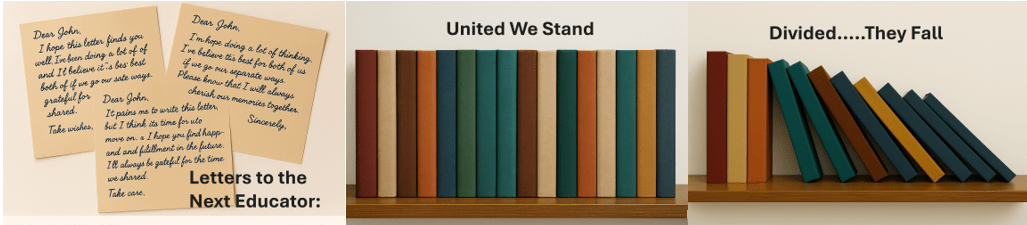
The power of a strong administrative team lies not just in individual talent, but in how those talents are paired. Compatibility must come first—the ability to communicate, trust, and align in purpose. From there, strengths should be considered to ensure balance. An effective team is not one where members share identical strengths; rather, it is one where strengths complement one another. When a team is too similar, it risks having the same blind spots or weaknesses, which can create imbalance and limit the team’s ability to meet the diverse needs of the school community.
When administrators bring different, complementary strengths to the table, it creates a dynamic partnership built on trust and mutual respect. Each leader understands their role while valuing the contributions of the other. This alignment is critical for a school community to see and feel. Staff need to know that their leaders are unified, transparent, and intentional in their decision-making. That consistency builds confidence and fosters a strong sense of support among staff.
This balance also enhances decision-making and problem-solving. Challenges are inevitable in leadership, but it is in those moments that each administrator’s strengths truly emerge. One may bring strategic thinking, another relational insight, and together they create solutions that are more thoughtful, well-rounded, and effective. This collaborative dynamic allows leaders to adapt more readily to the ever-changing demands of the role while building resilience in the face of obstacles and setbacks.
Over time, this type of partnership not only strengthens the administrative team but also promotes personal and professional growth for each individual. As leaders, we often speak about developing the “whole child.” In the same way, we must also strive to develop the whole individual within ourselves and within our teams. By embracing our strengths, supporting one another’s growth, and working collaboratively, we enhance our overall performance and effectiveness both inside and outside of the school environment.
Ultimately, our goal should always be to become the best version of ourselves—not by trying to be everything, but by becoming more of who we already are at our best.


Leave a Reply